Voyages Extraordinaires · No. 4
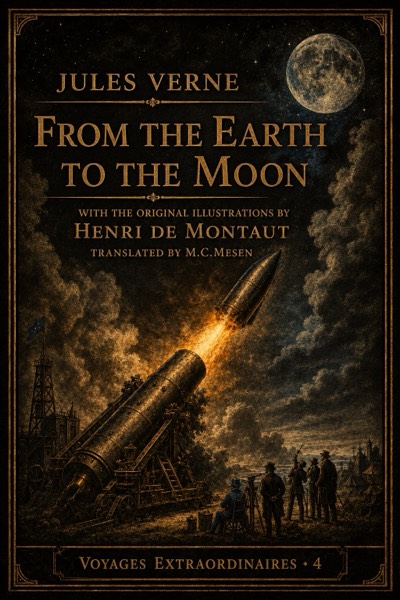
From the Earth to the Moon
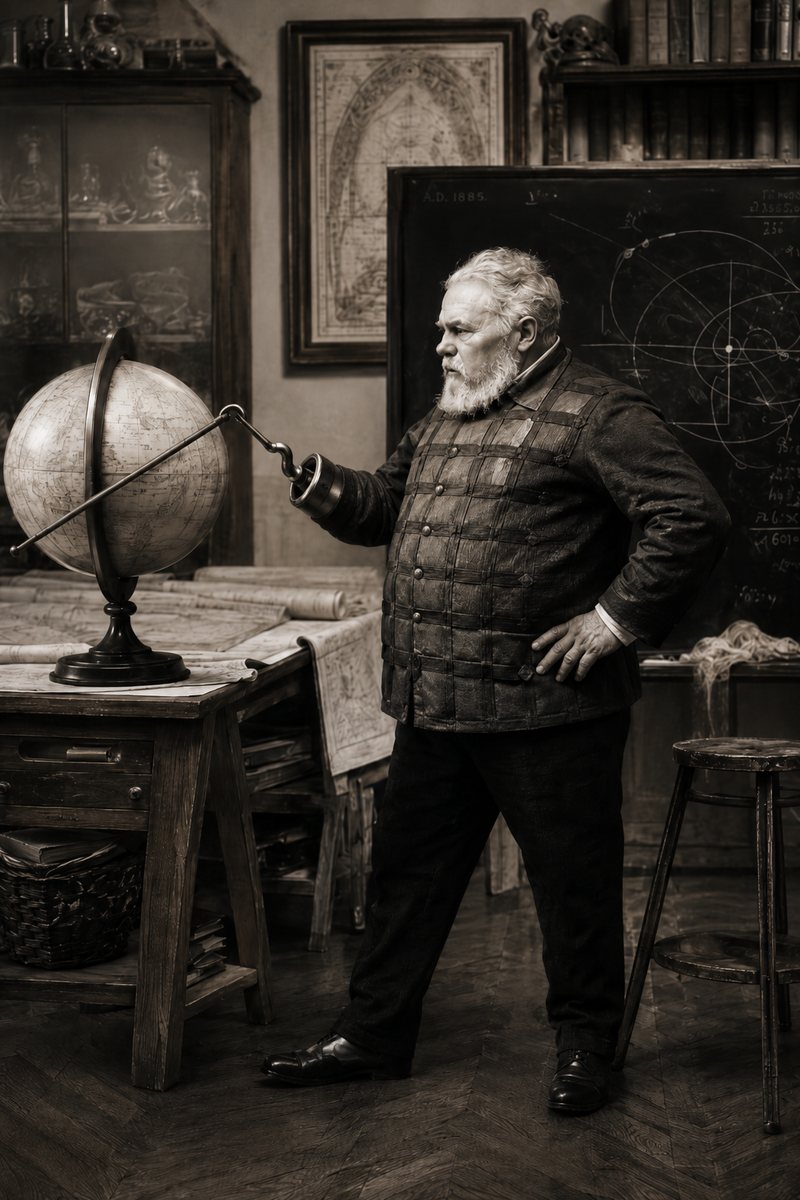
In the quiet aftermath of the American Civil War, the great artillerists of Baltimore find themselves with nothing left to shoot at. The Gun Club, that legendary society of cannon-makers, powder-experts, and projectile-designers, falls into a deep melancholy—its members, men who have spent years perfecting the art of hurling iron across battlefields, are left with only memories and the hollow echo of peacetime. Until, that is, their president, Impey Barbicane, rises before a stunned assembly and announces a plan so audacious, so magnificently absurd in its boldness, that it immediately banishes every trace of their gloom: they will build a cannon capable of firing a projectile to the Moon.
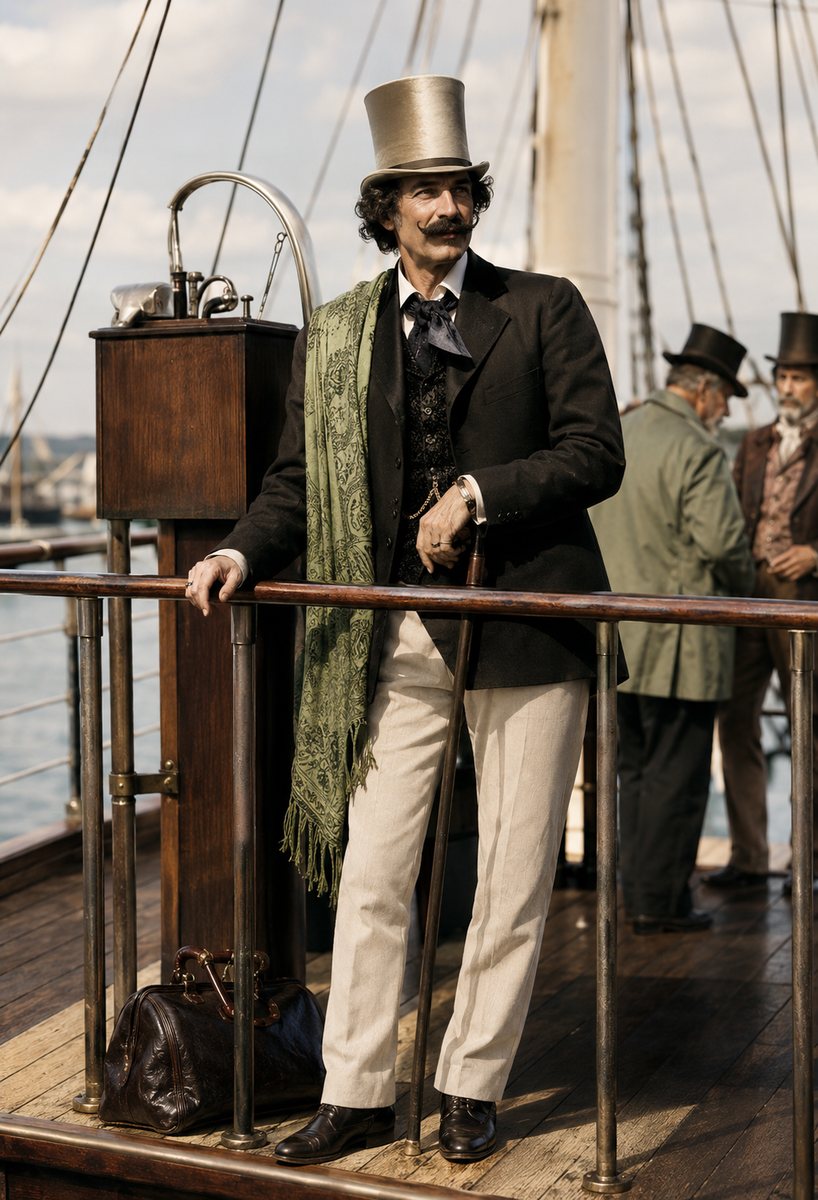
The project, named the Columbiad, quickly becomes an international sensation. Barbicane is a man of methodical genius—calm, precise, and utterly convincing. He calculates trajectories, determines the necessary velocity, chooses the ideal latitude for launch, and raises funds from every corner of the globe. But science alone cannot prepare the Gun Club for what follows. From France arrives Michel Ardan, a flamboyant, voluble adventurer who electrifies the proceedings by declaring that he will not merely observe the launch—he will ride inside the projectile and become humanity's first passenger to the heavens. The audacity of Ardan's proposal reshapes the entire enterprise, and the staid calculations of Barbicane are suddenly married to the reckless poetry of a man who believes that the impossible is simply a challenge awaiting the right spirit.
Not everyone is convinced. Captain Nicholl, a manufacturer of armour-plating and Barbicane's longtime rival, denounces the plan as suicidal folly. The two men, representing the ancient opposition of sword and shield, become locked in a bitter public dispute that soon escalates into a personal feud. Yet Verne, with his characteristic wit, shows how even the deepest enmity can be transformed when a grand enough idea captures the imagination. The selection of a launch site in Florida, the casting of the colossal cannon in a pit dug into the limestone of the peninsula, the construction of the aluminium projectile—every stage of the preparation is followed with breathless attention by a world united, for a brief moment, in its wonder at what human beings dare to attempt.
From the Earth to the Moon is a novel of pure, exhilarating possibility. Written nearly a century before the first rocket left the atmosphere, it is a work of remarkable scientific foresight—Verne understood the necessity of escape velocity, the challenges of a vacuum, and the psychological strain of space travel long before such concepts entered common awareness. But it is also a comedy of human character, a celebration of the eccentric, competitive, and irrepressible spirit that drives us to look upward and ask not why, but why not. Barbicane, Nicholl, and Ardan form one of the great trios in adventure literature: the methodical planner, the sceptical realist, and the exuberant dreamer, bound together by an idea that lifts them—and us—beyond the gravity of ordinary life.