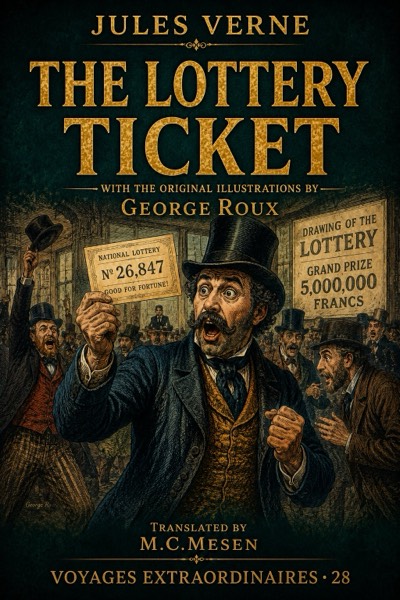
Voyages Extraordinaires · No. 28
The Lottery Ticket
Published in 1886, The Lottery Ticket — also known as The Ticket No. 9672 — is one of Jules Verne's most tender and human stories. Set among the dramatic fjords of Norway, it is a novel of waiting, hope, and the fragile boundary between fortune and despair.
Hulda Hansen lives with her mother and brother in the small village of Dal, nestled on the shores of a Norwegian fjord. Her fiancé, Ole Kamp, a brave sailor, has been lost at sea for months, and hope of his return grows dimmer with each passing day. The family's only remaining hope lies in a lottery ticket — a piece of paper that could transform their fortunes and bring Ole back to them.
Joel Hansen, Hulda's brother, holds onto the ticket as if it were a lifeline. The annual drawing of the Copenhagen lottery becomes a date charged with destiny, drawing the attention of the entire community. As the day approaches, the lives of Hulda, her family, and the people around them become intertwined in a narrative where every number carries the weight of a human story.
Verne captures the stark beauty of the Norwegian landscape — the towering cliffs, the still waters of the fjord, the long summer nights — with characteristic vividness. The Lottery Ticket is a small, intimate novel about the courage of waiting, the endurance of love, and the strange ways in which fate distributes its rewards. It reminds us that sometimes the greatest fortunes are not measured in money.