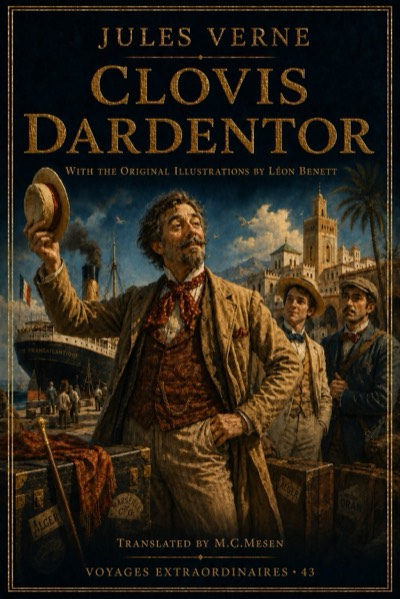
Voyages Extraordinaires · No. 43
Clovis Dardentor
Published in 1896, Clovis Dardentor is Jules Verne at his most playful — a Mediterranean comedy of manners, misunderstandings, and the unpredictable alchemy of generosity and self-interest. The novel begins when the wealthy and eccentric Clovis Dardentor, a philanthropist with more money than restraint, offers to fund an entire voyage for two young men from Perpignan to Algiers — on one condition: they must call him "Uncle."
Jean Taconnat, a dreamer forever chasing romantic fantasies, and Marcel Lornan, his more grounded and skeptical friend, accept the proposition with a mixture of eagerness and unease. What follows is a sea voyage that spirals into a series of comic encounters, near-disasters, and misunderstandings. Dardentor's generosity attracts a gallery of opportunists, well-meaning meddlers, and baffled bystanders, each drawn into the orbit of his peculiar charisma.
Verne fills the journey with the texture of Mediterranean life — the ports of call, the local customs, the food, the light. Madame Dardentor, Clovis's long-suffering wife, watches her husband's schemes unfold with a mixture of affection and exasperation, providing a grounding presence as the adventure threatens to spin out of control. Beneath the comedy, the novel explores the delicate dance between genuine kindness and the expectation of gratitude.
Clovis Dardentor is a lighthearted interlude in the Voyages Extraordinaires, but it carries a warmth that lingers. It is a story about the strange contracts we make with each other — the unspoken agreements between giver and receiver — and the surprising places where true generosity can lead.