CHAPTER ONE. ARTHUR
The year one thousand nine hundred ninety-nine, seventh month,
From the sky will come a great King of Fraieur.
To bring back to life the great King of the Mongols,
Before and after Mars to reign by good luck.
Nostradamus— Centuries X, 72
1
Death is but a step in the infinite history of souls.
Rome, June 21
His fingers twitched as he pulled the watch from his pocket.
He wasn’t a fan of convention—the beautiful eighteen-karat Waltham 16S, in his family for generations, was the only one he allowed himself.
It read seven minutes to noon.
“What’s the matter, Giuseppe?” the ambassador asked his driver.
“I think there’s an accident, Signore.”
The car had been stuck in traffic for several minutes, and although he had relaxing music playing on his phone, the stress of the day was weighing on him.
Just blocks away, the ancient Romans’ favorite place of entertainment had survived for millennia: the Circus Maximus, an arena of spectacle and death for centurions, slaves, and Christians in the age of the Caesars.
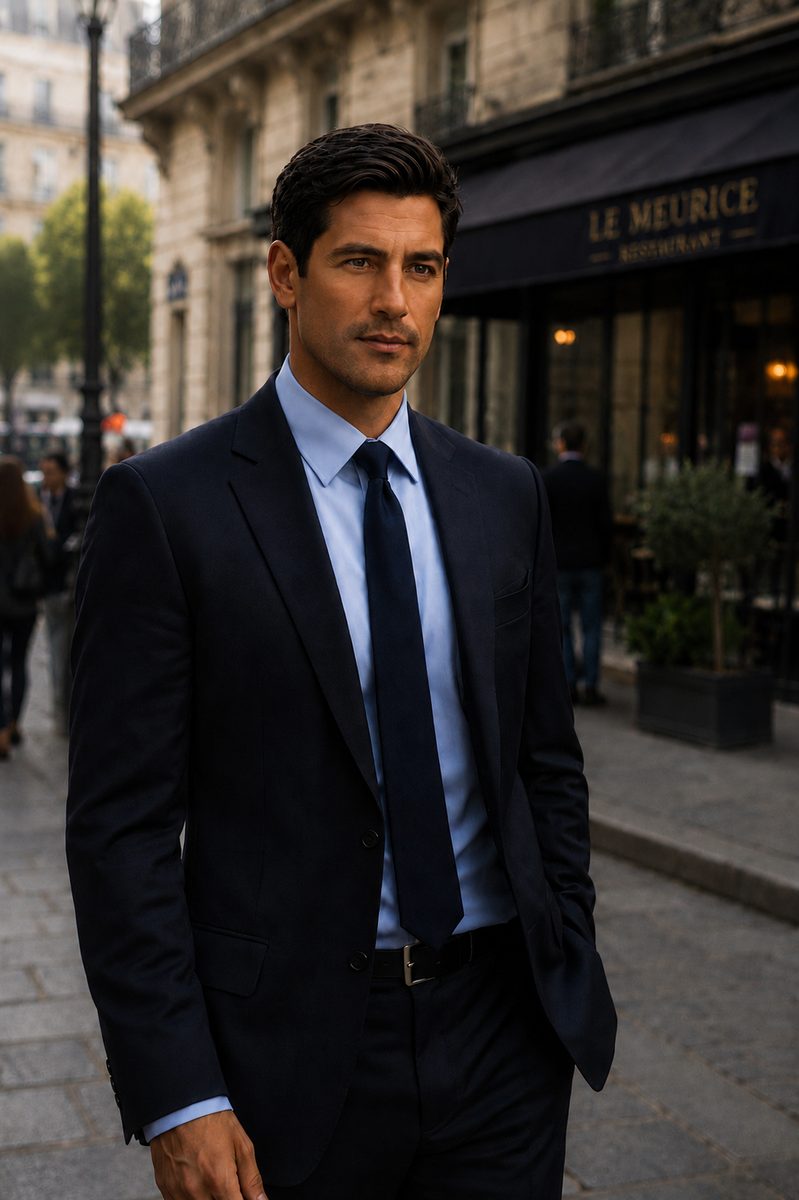
Arthur Huxley, Costa Rican Ambassador to Italy, reread the speech he was about to deliver at a conference on the new international ecological order, a field in which his country had played a leading role for years. Yet, for reasons that had nothing to do with ecology, this would be the most important speech of his life.
He was tense. His hands toyed with an SD memory card while beads of sweat slid down his forehead.
“Giuseppe, what do you know about Nostradamus?” he asked, trying to calm his nerves.
“Nostradamus? The prophet? I remember many years ago, in 1999, the madness with his prophecies. Grazie a Dio, they never came true! And then in 2012, when they linked them with the Mayans.”
“Well, you seem to know a thing or two about it.”
“Yes, signore, la mia moglie loves prophecies. In fact, I got married because of Nostradamus. She convinced me that the world was going to end, I believed her, and I got married! I should have known better, but I was twenty-two, I was a bambino, signore.”
Giuseppe gestured wildly, his hands flying everywhere.
Very Italian, thought the ambassador, smiling despite himself. Then he remembered his mission for the morning. If only life were that simple, he thought, his mood turning serious.
“Yes, like your wife Maria, many believe that prophecies control destiny. Have you ever heard of the lost years of the calendar?”
“No, my calendar has all the years. Too many, I’m afraid!” Giuseppe replied jokingly, knowing he was about to receive a lecture on the subject. That was why he liked the ambassador: he was always trying to teach him something.
“Several theories claim that this is not the year we think it is. Two German historians, Heribert Illig and Hans Niemitz, argue that in the Middle Ages, Emperors Otto III and Constantine VII conspired with Pope Sylvester II to add two hundred and ninety-seven years to the calendar—so their reigns would fall in the year 1000 AD, a year of great significance, rather than in the 700s. It’s known as the Phantom Time Hypothesis. According to them, we would actually be living in the 1700s.”
“I knew it, signore! We are in the Wild West!”
“Be serious, Giuseppe. Ernst Hollstein, in his ‘three-ring theory,’ argues that the discrepancy is twenty-seven years, due to an error in 525 AD, when Dionysius Exiguus tried to align the Julian and Gregorian calendars.”
“I believe that one. My cousin Dionisio is terrible at math, signore, terrible!”
The ambassador couldn't help but laugh at Giuseppe's humor; the man had a witty remark for everything. But then, the grim mood that had shadowed his aura all morning settled over him again.
“Others say the discrepancy originated in the calendar reform of 1582, the result of a pact between the Church and the nobility to erase years—though how many remains unclear. The Church, as keepers of the record of time, had the means to do so. They acted gradually, a year here, a year there, so it would pass unnoticed.”
“Signore, that is weirder than the Nostradamus stuff. Why do something like that?”
“I don't know. Perhaps because of the prophecies that spoke of the end of the world at the close of the second millennium. By erasing years, people in the 'false' millennium would flock to the Church seeking forgiveness. Years later, when the true millennium arrived, they would be better prepared for Armageddon.”
“Vatican propaganda, signore, propaganda!”
This time, they both burst out laughing.
The ambassador liked his driver, always trying to find the funny side of life. No one would guess he had once been part of an elite unit in the Italian army. Not even the madness of the war in Afghanistan and the thirty-four Italian soldiers killed in combat—including his youngest brother-in-law—in the name of a stupid war, had managed to embitter the life of former Lieutenant Giuseppe Bardello of Calabria.
“Well, today, Giuseppe, you can tell your wife that some lunatics are trying to fulfill Nostradamus's prophecies. That’s why I need to get to the conference as soon as possible; someone there will help me deal with these madmen.”
This twenty-first of June marked the beginning of summer, the solstice, an important date in his family. But this was no typical summer morning for Arthur Huxley. He had barely slept the night before, piecing together a puzzle that initially made no sense, but now revealed an incredible image before him. The prophecies of Nostradamus were merely the tip of an iceberg about to collide with humanity, threatening to sink its future.
The problem would be getting people to believe in his “eccentric” conspiracy theories.
Too many lives depended on how seriously the information he was about to share was taken!
The worst moments are those in which nothing seems to happen, and yet everything does.
He remembered reading that phrase somewhere. It described his crossroads perfectly: everything appeared calm, but he knew that everything was happening.
The man—the stranger who had shown him the way and revealed the names of the key players, the man who claimed to have been a friend of his grandfather in England despite not looking old—was waiting for him; he would help make the information known to the world.
Perhaps because he was fully aware of what he knew, fear set in. He had never felt it so intensely, and as the vehicle neared its destination, the sensation only grew. He wasn’t sure what—or whom—to fear, because no one, absolutely no one, yet knew what he had uncovered, not even the stranger.
The secrets had fallen into his hands from many sources, piece by piece, by chance—or perhaps by fate—as if destiny had chosen him to reveal them to the masses.
On the other side of the street, a car braked abruptly in front of his window. Arthur looked up, locking eyes with two men in ski masks running toward him. His heart beat faster.
At that instant, his gold watch struck twelve.
2
San José, Costa Rica, June 21
Sunbeams slipped through the large north-facing window, illuminating part of the room. The curtains were drawn back, revealing a beautiful panorama. A current of fresh air drifted inside, filling the space.
Ricardo Díaz sat in front of his laptop. He pounded the keyboard furiously, typing whatever came to a mind tormented that day by terminal thoughts. On the screen, his final sentences were visible—a kind of resignation from the world, an acceptance of a death he felt was near and inevitable.
“Is there anyone who would claim that existing— that ‘being’ human— is an easy experience? Fromm said that ‘man, at birth, is thrown from a definite situation, as definite as his instincts, into an indefinite, uncertain, open situation. Certainty exists only with regard to the past, and with regard to the future, only the certainty of death.’ With so many unanswered questions, and so many matters whose understanding is forbidden to us, the experience of living can turn into an endless tunnel, a labyrinth with no exit, a magic mountain we try to climb without ever reaching the summit.”
That morning, the task of living felt overwhelming. Ricardo was tired of climbing toward an unreachable summit; of crossing an endless tunnel without seeing light or exit; of being lost in this strange labyrinth we call life, unable to solve the intrinsic riddles of existence.
“Why continue torturing myself when I no longer want to go on? I have tortured myself enough… in the silence of my own mind, in the impersonality of the crowd, in the false pleasure of orgasm. Why go on? What for?”
He remained motionless for a few seconds, staring through the window without really seeing.
Next to the computer lay a gun. He picked it up and placed it over his heart. A single bullet, in precisely the right spot, would end it all…
Several times over the past few months—endless, desolate months—he had imagined dying like this, by such an instantaneous and deeply personal method.
A new sentence materialized on the monitor, no doubt born from some dark corridor of his tortured mind:
“If death is also an endless tunnel, how is that any different from my life? I don’t believe it could be worse than this meaningless existence.”
He hesitated for a moment when he caught his reflection on the screen. He was young, good-looking… yet his eyes revealed a soul weighed down by sadness, loneliness, and bitterness.
He set the gun aside and looked once more through the large window of his house, perched on a beautiful hill in Escazú. From there he could see San José to the east; dozens of mountains to the north; and to the west, more mountains still—some dotted with distant lights, with distant lives unfolding on their slopes and peaks. Lives that, perhaps, were also wondering that morning whether existence held any true meaning.
Time passed slowly, as it does when one waits for something with great intensity.
Sunlight reached the corner where he now sat motionless on the floor, his head buried between his arms. He lifted his face; the light caught his dark eyes—he was crying.
He picked up the gun again and aimed it at his chest, searching deep inside himself for the courage to pull the trigger…
But he didn’t find it this time either.
Or perhaps his mind found it, but his body did not respond—his fingers refused to obey, as if they knew that this was not the way.
At that precise moment, the landline rang.
It had been a long time since anyone had called that number—so long that he had forgotten it even existed.
Seconds later, as he listened to his own tension-filled breathing, someone knocked twice on the door.
“Yes?” he shouted, exasperated.
“Mr. Díaz, Minister García is on the line. He says it’s urgent,” a woman replied.
“I won’t speak to anyone. I don’t work for him anymore,” Ricardo snapped.
He was about to pull the trigger, but once again, he couldn’t.
The woman on the other side of the door—his family’s housekeeper for many years—hesitated. She knew something was tormenting Ricardo’s mind; his behavior hadn’t been normal for quite some time. The day before, he had spent hours in the garden without eating, his gaze lost in the void. Having worked for his family since he was a child, she knew this was the darkest moment of his life—his deepest depression.
She insisted, her voice trembling.
“Ricardo, please… take the phone.”
He lifted the receiver almost unconsciously, without lowering the gun in his other hand.
“What do you want?” he shouted.
His voice was razor-sharp with rage.
On the other end of the line, the confused Deputy Minister of Foreign Affairs replied:
“Ricardo, it’s José Rodríguez. Calm down. I feel as bad as you do about what happened today in Rome. We wouldn’t be calling you if the situation weren’t serious. Despite the pain you must be feeling, we need you to come right away.”
José’s words shifted Ricardo’s mood—from fury to surprise, then concern.
“Pain? What are you talking about? What happened in Rome?”
Rome.
The mere mention of the city unsettled him. In his search for someone to blame for the failure of his life—one that had led him to this fatal decision—Rome loomed in his mind in enormous letters.
“What? You don’t know…?”
“Know what?” he asked, alarmed. Then resentment surged back. “Actually, I don’t want to know. Arthur is there—remind García that he chose him over me. Whatever it is, deal with it without me.”
He was about to hang up, but the desperation in José’s voice stopped him.
“Ricardo, I swear, this is not the time for that. Something very serious has happened, and we need you. I’d rather not discuss it over the phone. Trust me. I’ve sent a car for you—just come.”
Without giving him time to reply, José hung up.
Ricardo placed the gun next to the phone and sat on the edge of the bed.
He was confused. And yet, beneath that confusion, something urged him to go. Perhaps it wasn’t an inner voice—just curiosity, the need to know what could have happened in Rome to provoke such an unwanted call.
Some meaningless political nonsense… as always.
And yet, Rome still mattered to him.
Arthur Huxley—the ambassador—was not only his first cousin and the only family he had left in the world. He was also his best friend.
Ricardo stood up, went to the bathroom, wiped the sweat from his forehead, and splashed cold water on his face to shake himself awake. He took a suit from the closet—the blue Armani Arthur had given him for his last birthday.
He was smoothing his straight hair, longer and thicker than usual, when he heard a car entering the vast property he had inherited after his mother’s sudden death.
Everything felt slow: the car, the wind, the beating of his heart.
Once again, the desire to end it all surged within him. He hadn’t forgotten that his greatest wish, just moments before, had been to die.
One second.
Just one second.
How little human beings value each second of their lives. How fragile life is—how easily it can end in a single second.
His thoughts collided chaotically, impossible to organize.
He scribbled the first thing that came to mind—his seemingly irrevocable resolution:
Go there. But when you come back, you’ll end it all, you damn coward.
The car pulled away the moment he got in. Soon, he was speeding along the highway toward downtown.
“Carlos,” he asked the driver coldly, “have you ever thought about killing yourself?”
Carlos glanced at him, startled.
“I’m kidding, man—it’s a joke,” Ricardo added quickly, forcing a strange, inexplicable smile.
Continue in the full book →
amazon.com · amazon.co.uk